Hi,
We often hear about how fiber-rich foods are good for the microbiome. But how does the microbiome actually work?
Today, I’m going to explain how a healthy and diverse microbiome can team up with the digestive system to keep the intestinal barrier intact, reducing inflammation and promoting better overall health!
But first, what is a diverse microbiome?
A highly diverse microbiome is when a wide variety of microorganisms including bacteria teams up with our digestive system to help maintain a healthy protective intestinal barrier.
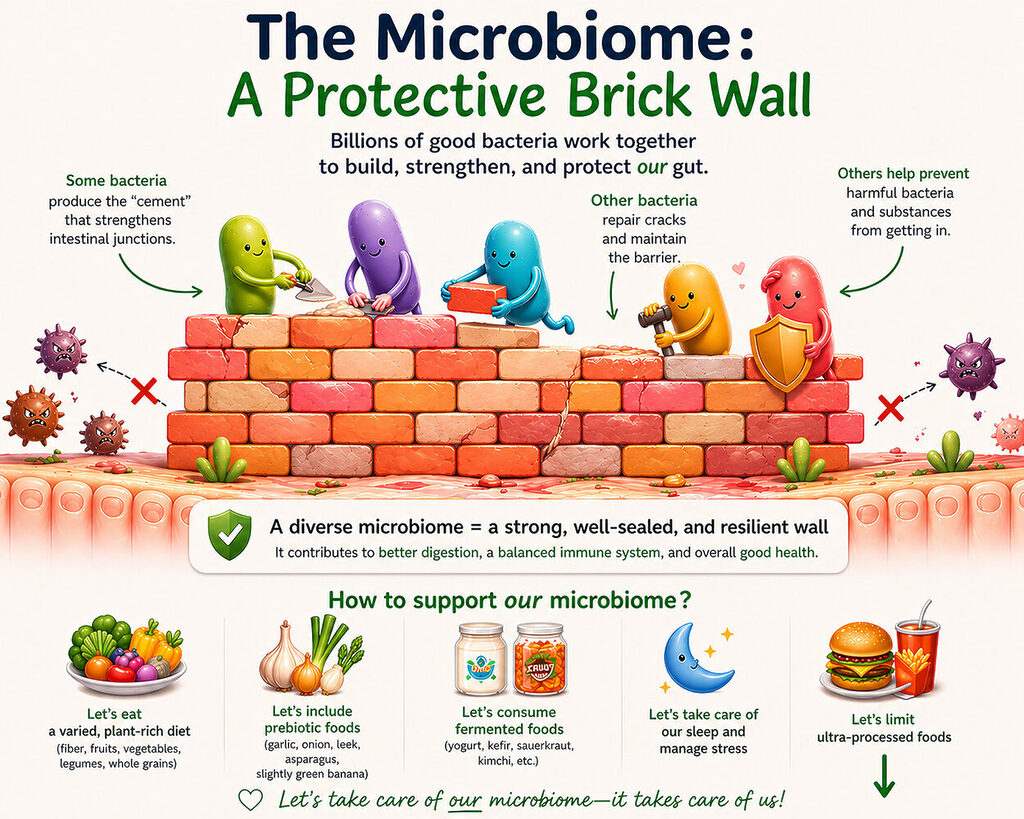
Let’s imagine the work of the microbiome’s bacteria using the analogy of a team of bricklayers building a brick wall.
In this analogy:
The bricks in the wall are the cells of the intestinal lining
The mortar between the bricks represents the butyrate, which binds the cells together and keeps everything tightly sealed.
The complete brick wall plus maintenance, protection, including inspection of integrity represents the intestinal barrier including the microbiome bacteria and immune system that protects our body.
The team of bricklayers represents the good bacteria (the microbiome).
Each bricklayer has a specific role in the construction of the wall, it is important to have a diverse team of bricklayers to cover the multitude of roles that are required to build and maintain a high quality wall.
We could compare the multi-talented team of bricklayers to good bacteria; when they are diverse, our microbiome is more varied and healthier.
The diverse roles of bricklayers:
1. Builder bricklayers create / mix the mortar, place it between the bricks, and ensure the bricks are properly bonded.
- This is equivalent to saying that the bacteria in the microbiome, produce, among other things, butyrate, which helps keep the cells of the intestinal wall tight.
- Without enough bacteria, the mortar becomes weak.
2. Repairer bricklayers maintain the wall and help repair cracks so that the wall remains strong over time.
- This is equivalent to saying that certain bacteria in the microbiome nourish the cells and help repair cracks.
- The wall remains strong for a long time.
3. Reinforcer bricklayers prevent vandals from breaking / damaging the brick wall.
- In other words, the good bacteria in the microbiome prevent “bad bacteria” from damaging the wall.
- Thus, there is less damage to the cement and bricks.
4. Protector bricklayers prevent fires near the brick wall.
- This is equivalent to saying that the good bacteria in the microbiome prevent excessive inflammation.
- The wall does not become porous.
So, within the team of bricklayers, there are some who build, others who repair, reinforce, and protect the cement so that the wall remains strong over time. We don’t want the cement to weaken, because holes could form and the wall would become less watertight.
A diverse microbiome is a team of diverse bacteria: some produce the butyrate, others reinforce it, some protect it, and others repair the butyrate between the cells. This teamwork helps maintain the integrity of the intestinal wall.
What happens when the wall is no longer intact and the barrier begins to fail?
Imagine that the cement between the bricks, cracks.
What happens? Some bricks shift and come loose. The wall is no longer watertight.
When our microbiome lacks diversity, certain “bricklayer” are missing, the butyrate is poorly maintained, and cracks appear more easily.
As a result of these cracks, elements can enter that would normally remain outside the wall. This means that, over time, these elements could enter the bloodstream.
• Small pieces of undigested food (e.g., when we eat too quickly, and the intestinal barrier is weakened)
• Toxins
• ‘’Bad’’ bacteria
After a long time, our bodies may view these substances as intruders and react as if under attack by:
• Releasing inflammatory molecules
• Activating immune cells
• Triggering an inflammatory response
This is one of the reasons why, over along period of time, some people may experience:
• Discomfort after certain meals
• Bloating
• Abdominal pain
• Constipation and/or diarrhea
Also, in the long-term these elements enter the bloodstream, and may result in people experiencing:
• Persistent fatigue
• Headaches
• Brain fog
• Joint pain
What happens when the wall is capable to perform its many functions and remain watertight?
When the wall is watertight, cracks are repaired quickly, the cement remains intact, and the wall stays strong. This is what we call a DIVERSE MICROBIOME!
How do we build a strong wall—in other words, how do we maintain a diverse microbiome?
We can regularly contribute to building our diverse microbiome. Here’s how:
By including fiber-rich foods in our diet, since fiber is the primary food source for many beneficial bacteria, and their diversity fuels the variety of the microbiome.
• Fiber is not digested by our bodies
• It reaches the colon, intact
• Bacteria use fiber by fermenting it to produce beneficial compounds.
• These beneficial molecules (such as short-chain fatty acids) serve as an energy source for gut cells.
• This helps strengthen and maintain the intestinal wall by keeping the cells tightly bound together.
• And helps regulate the immune system and reduce inflammation in the gut and throughout our body.
Which fiber-rich foods are delicious and nutritious? Here are some examples:
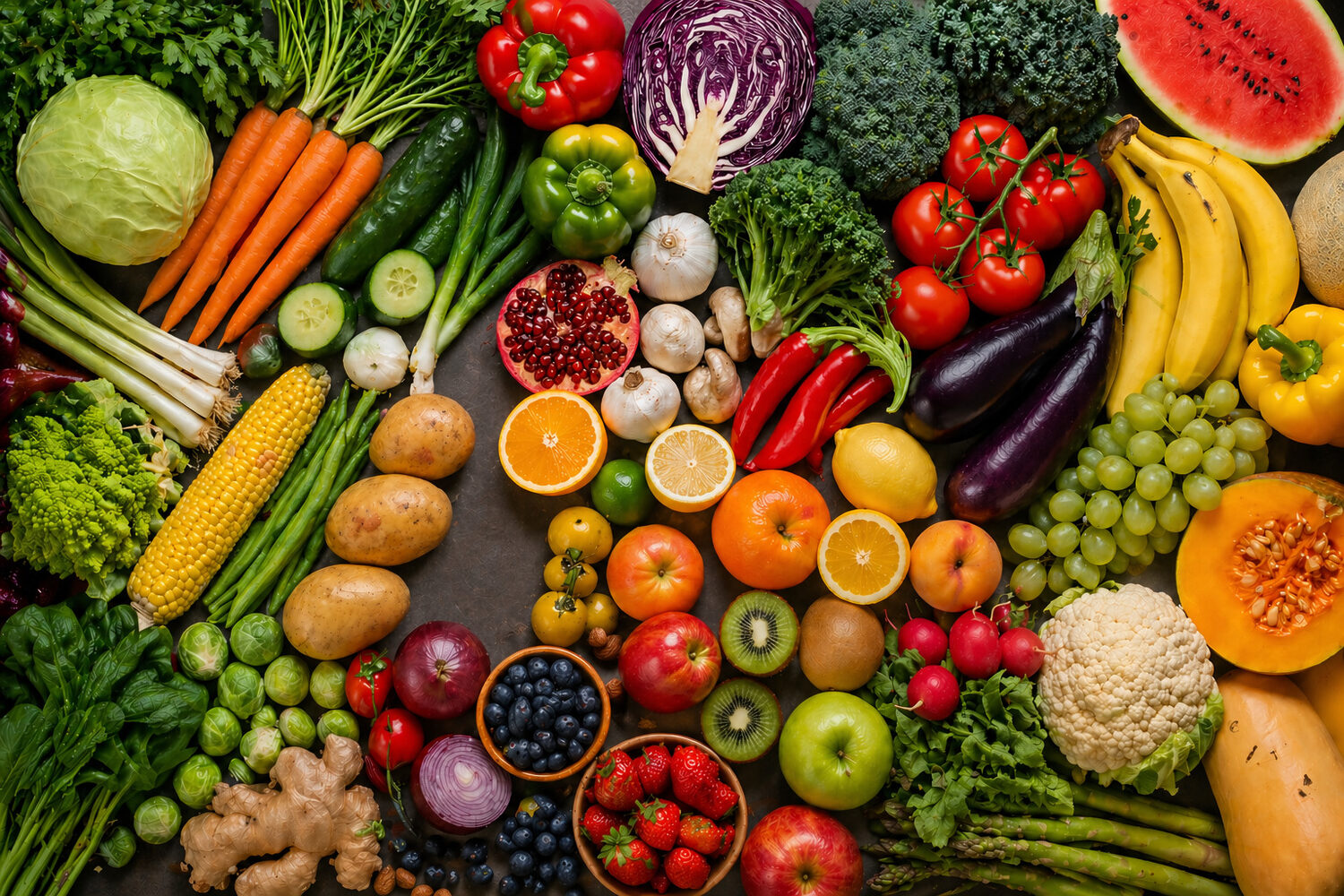
• Vegetables: carrots, cabbage, broccoli, bell peppers, squash, asparagus, beets, cauliflower, radishes…
• Fruits: pears, apples, raspberries, oranges, clementines, grapes, mangoes, blueberries, melons, nectarines, peaches, bananas…
• Whole grains: barley, quinoa, brown rice, whole-grain pasta, whole-grain bread, oats, buckwheat
• Legumes: beans (red, black, white, pinto, mung, azuki, lima, navy), chickpeas, lentils…
The more colorful and varied our plate is, the better it tastes,
and as a bonus, the more diverse and robust our microbiome becomes!
How do we continue to build a strong foundation—in other words, how do we cultivate a diverse microbiome?
- By cooking with prebiotics, which are also rich in fiber and stimulate the growth of beneficial bacteria in the microbiome. Here are some examples:
- Garlic
- Onion
- Leek
- Asparagus
- By including fermented foods in our meals or snacks:
- Yogurt
- Kefir
- Sauerkraut
- Kimchi
What weakens the cement and makes the wall—and therefore the microbiome becomes more fragile?
You guessed it:
- Ultra-processed foods*
- Sweets
- Lack of fiber-rich foods
- Excessive alcohol consumption
*Examples of ultra-processed foods:
Here is a list of some of the most consumed ultra-processed foods, ranked by the place they occupy in the average Quebec grocery basket:
• Sliced white bread,
• Hamburger and hot dog buns.
• Soft drinks
• “Fruit drinks” (which are not 100% pure juices)
• Sweetened iced teas
• Energy drinks
• Non-alcoholic beers
• Sliced ham
• Smoked sausages
• Chicken nuggets
• Frozen pizzas
• Microwaveable pasta dishes
• Processed “Orange” cheese slices (made from modified dairy products).
Why are ultra-processed foods so popular?
• Because they’re quick to prepare and cost less, ultra-processed foods offer a “cheap” way to eat amid rising living costs.
• Unfortunately, In Quebec, in 2026, ultra-processed foods account for 43% to 47% of families’ daily energy intake.
• For tips on how to save money while doing a healthy grocery, I invite you to read this article.
One change at a time, every little effort counts :)
I hope I’ve convinced you that by taking care of the diversity of our microbiome, we strengthen our inner balance and give our bodies the best conditions to stay healthy.
If you’d like to discuss this further, please feel free to talk with me about it at your next appointment.
Thank you for taking you health to heart,
Your Nutritionist and Keynote Speaker, Johanne Vézina, Dt.P.