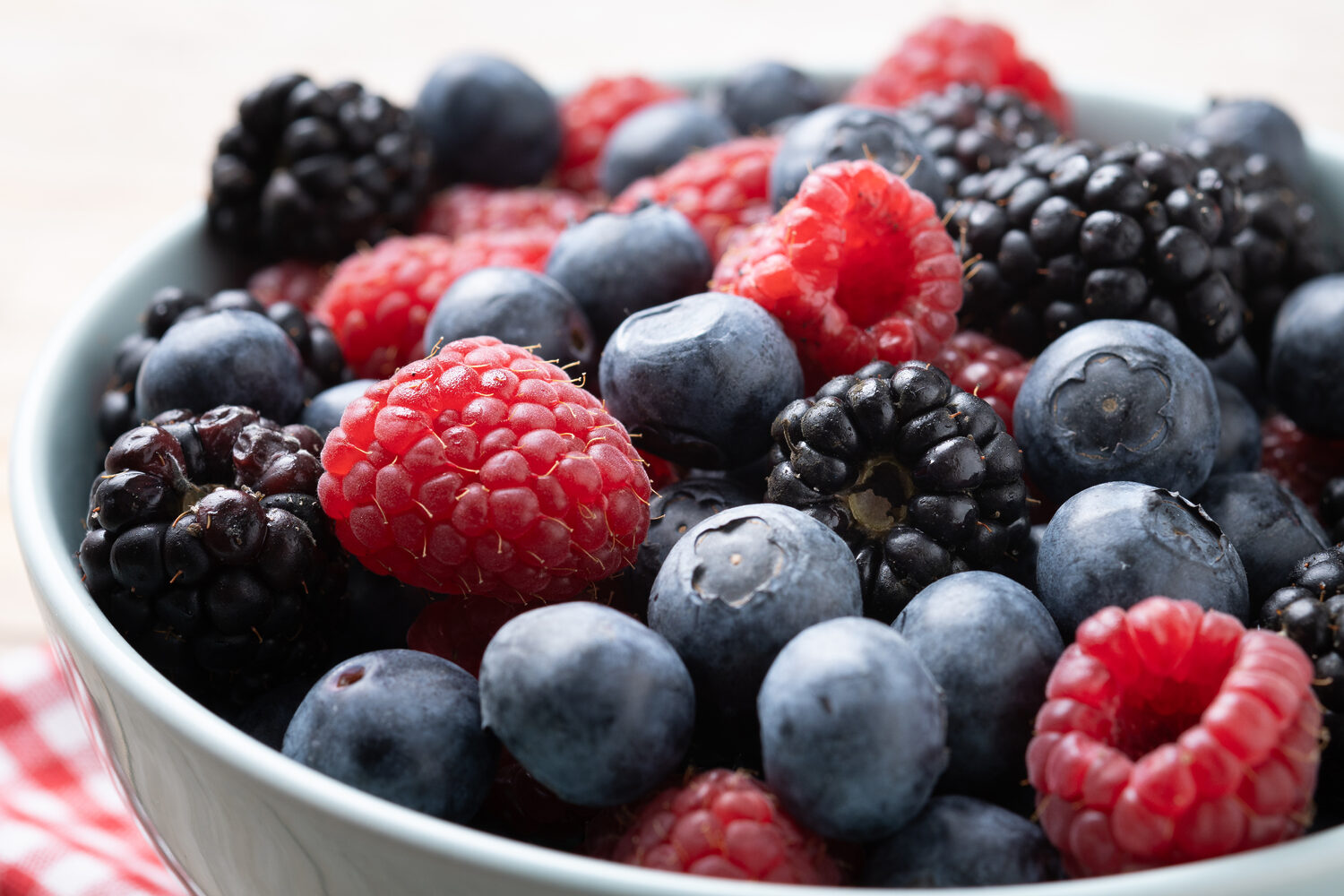
In this month dedicated to heart health, I would like to share with you some information about field berries, such as raspberries, blueberries, strawberries, blackberries, cranberries, and haskap berries.
What exactly is haskap?
The haskap is a small purple-blue fruit, oval or elongated in shape. It tastes a mix of blueberries and raspberries with a tangy note. It ripens very early in the season and is ready to harvest from late May to late June. Like other berries, it is found fresh and in the frozen food aisle at the grocery store.
Why are wild blueberries from the Saguenay, North Shore and the Maritimes excellent?
The harsh winters in these areas could stimulate blueberry plants to protect themselves by producing up to 30 distinct forms of anthycyanins. Anthycyanins, in turn, have different benefits on the health of our heart, but also on the health of our brain and that of our microbiota.
Shopping for fresh berries in the winter can be more expensive.
You’re right, in northern regions like Québec, there is limited local supply making them more expensive during the winter. Thankfully a good alternative to fresh berries is frozen berries, not only are they more affordable, they are also highly nutritious, and easy to find. Keep your eyes peeled for specials at your grocery store, it’s a great opportunity to stock up and enjoy fresh berries in every season!
Possessing special qualities, field berries are the focus of numerous studies.
Although more clinical studies are needed to confirm their effects on our health, the current scientific results are very promising. In other words, when we regularly eat these small fruits with red, blue, or purple skin and flesh, our risk of cardiovascular disease decreases significantly.
In particular, the results of research carried out on wild blueberries over a period of 24 years which showed how vascular function is improved following their ingestion thanks in part, to the anthocyanins they contain.
Wondering where their beautiful colours come from? They come from anthocyanins, which are natural polyphenols that have beneficial antioxidant and anti-inflammatory properties.
How do natural polyphenols (anthocyanins) in berries protect our hearts?
If we looked at the composition of berries under a microscope, we would see that they contain anthocyanins as well as vitamins, minerals, fiber, and lots of water, among other things.
And among the constituents of berries, it seems that these micronutrients play a major role in protecting our hearts.
Studies have shown that these micronutrients in berries helps to:
• Lowers LDL cholesterol, known as bad cholesterol
• Increases HDL cholesterol, known as good cholesterol
• Reduces inflammation by lowering C-reactive protein levels
• Reduces the risk of heart disease by at least 12 to 34%
• Lowers fasting blood sugar levels
• Reduces body mass index
“Variety’s the very spice of life, / That gives it all its flavour” poet William Cowper (1731-1800).
It goes without saying that the benefits seem more pronounced when we eat our berries as part of a varied, balanced, and minimally processed diet. The Mediterranean diet, adapted to your taste and culinary skills, is a delicious and effective example of this.
Is eating a bowl of berries a few times a week enough?
Yes, current research suggests eating berries 3 to 4 times a week or even every day, when possible.
Remember to eat until you are full and stop when you feel satisfied. The amounts studied in most research range from 150 to 250g, which is approximately a dessert bowl full of berries.
Is there a specific time of day to eat berries so I can take full advantage of their health benefits?
Anytime is good, treat yourself by incorporating them (fresh or frozen) into your breakfast, lunch, snacks, or supper.
Thank you for taking care of your heart!
And Happy Valentine’s Day!
Your Nutritionist and Keynote Speaker, Johanne Vézina, Dt.P.
References: